Soap Operas and Telenovelas in the Digital Age: Global Industries and New Audiences by Diana Isabel Arredondo Ríos and Mari Castañeda
Soap operas and telenovelas are watched by millions of people around the world every day. As cultural, social, and economic phenomena, examining them will further our understanding of the role of global media content in the digital age. Moreover, as these programs continue to be exported and transformed at regional levels, and through digitalization, it is more important than ever to analyze where the genre has been, where it is now, and where it is going.
About the authors: Diana I. Rios is Associate Professor in the Department of Communication Sciences and directs the Institute of Puerto Rican and Latino Studies at the University of Connecticut, Storrs. Her research and teaching includes examinations of content such as news and entertainment, and the audience’s functional use of media. She studies race/ethnicity, culture, gender and sexuality in media, and intercultural communication processes.
Mari Casta eda is Associate Professor in the Department of Communication and the Center for Latin American, Caribbean, and Latino Studies at the University of Massachusetts, Amherst. Her research includes political economy of global communication, and Latina/o media studies.
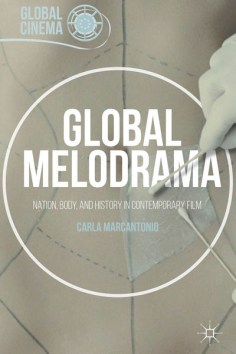 twenty-first century setting across regional and national boundaries, analyzing film texts from a variety of national contexts in the wake of globalization.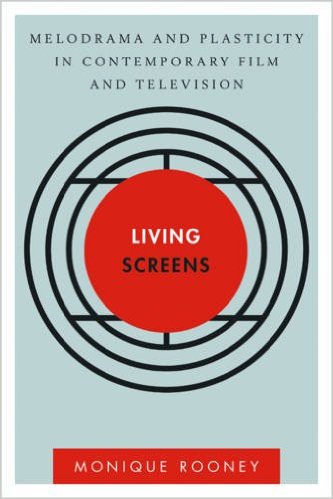
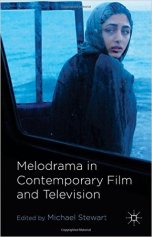 re-visioning; home and borders; gendered and queer relations; the family and psychic identities; the national and emerging public cultures; and morality and ethics.”
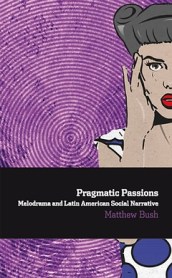 tial role in the framing of Latin American fictional narrative. Over that same time period, melodramatic reasoning has influenced the critical models through which the countries of the region conceive their respective histories and political landscapes. Pragmatic Passions: Melodrama and Latin American Social Narrative demonstrates how melodrama is deployed as a convincing means of affectively narrating socio-political messages, yet how it also unwittingly undermines the narrative structure of paradigmatic works by Rómulo Gallegos, César Vallejo, Roberto Arlt, Jorge Amado, and Carlos Fuentes.
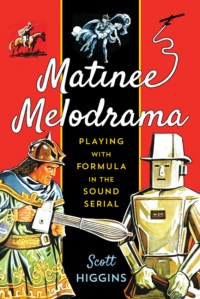 serials whose exciting cliffhangers compelled the young audience to return to the theater every seven days.
 Melodrama Research Consortium