Author Archives: tlepro

May 2019

978-3-030-14872-0

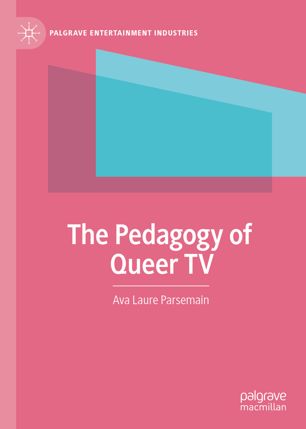
The Pedagogy of Queer TV
by Ava Laure Paresemain

This book examines queer characters in popular American television, demonstrating how entertainment can educate audiences about LGBT identities and social issues like homophobia and transphobia. Through case studies of musical soap operas (Glee and Empire), reality shows (RuPaul’s Drag Race, The Prancing Elites Project and I Am Cait) and “quality” dramas (Looking, Transparent and Sense8), it argues that entertainment elements such as music, humour, storytelling and melodrama function as pedagogical tools, inviting viewers to empathise with and understand queer characters. Each chapter focuses on a particular programme, looking at what it teaches—its representation of queerness—and how it teaches this—its pedagogy. Situating the programmes in their broader historical context, this study also shows how these televisual texts exemplify a specific moment in American television.

Summer 2019

Indiscretions of an Italian Lover: Montgomery Clift, Masculinity, and Melodrama

in The Italianist
by Sam Gaglio

Abstract: This article utilizes production documents found in the David O. Selznick
Collection to explore the role of masculinity as it is constructed in Stazione Termini (1953). More specifically, it seeks to reframe Montgomery Clift, the film’s lead actor, as an inetto: an inept masculine character who repeatedly submits to the commands of both Mary, his lover, and her adolescent nephew, Paul. Traditionally an archetype found in Italian comedy, Clift’s performance exemplifies the role of the inetto in the context of melodrama. While the comedic inetto demands centre stage in its film, the melodramatic inetto is instead pushed into the periphery, queering the heteronormative representation of the male leading character and undermining traditional notions of masculinity. The production files reinforce this reading.

Courtroom Melodrama: Dramatizing Characters and Audiences in A Tale of Two Cities

in Victorians: A Journal of Culture and Literature
by Brittany Reid

Abstract:In the preface to A Tale of Two Cities, Charles Dickens recalls that he conceived of the idea for the novel while staging a scene from Collins’ play The Frozen Deep with his children. Building on this account of the story’s theatrical inspiration, public displays or acts of performance are prominently featured throughout the novel and punctuate moments of collective unrest, false behavior, or political corruption. From the showcasing of the guillotine executions to the characterization of crowds as active audiences, dramatic tropes, forms, and terms are frequently employed throughout the text. This article explores the theatrical imagery of A Tale of Two Cities as it communicates a political statement, contributes to the narrative as a whole, and engages with established dramatic traditions from the period, such as melodrama. To that end, it specifically considers the use of melodramatic conventions in the court scenes to demonstrate Dickens’s “politics of performance” in the novel.

Darkness in the spotlight: Binaries and brutality in Zhang Yimou’s ‘Shadow’

in Metro Magazine: Media and Education Magazine
by Debbie Zhou

Abstract: While Zhang Yimou’s latest Wuxia offering bears the hallmark action and melodrama elements of his earlier work, it stands apart in terms of visuals, featuring a subdued, largely monochromatic palette and unfurling, brushstroke-like compositions. With this calculated stylistic move, the Chinese director allows the violence, corruption and conflict at the core of his historical tale to starkly taint each frame

“Melodrama, Purimspiel, and Jewish Emancipation”

in Victorian Literature and Culture

by Sharon Aronofsky Weltman

Abstract

Long forgotten, Elizabeth Polack (fl. 1835–43) is the earliest known Jewish woman playwright in England. This essay argues that her first play, Esther, the Royal Jewess, or the Death of Haman! (1835), performed at a public playhouse in the Jewish working-class neighborhood of London’s East End, radically realigns diverse genres and populations in advocating both Jewish emancipation and a voice for women. By way of a very brief introduction, I first point out the applicability here of Judith Butler’s Notes toward a Performative Theory of Assembly. Butler explores how group protest, such as Tahir Square or Occupy Wall Street, serves as a kind of communal bodily signification. Of course, her point is not to address how people come together in a public theater, where the cast arrives daily for salaried jobs and the audience plunks down cold cash for a fun night out. Yet something else meaningful can occur in assembly within the theater. Theatrical performances can take on the discursive power of political assembly that Butler defines, signifying “in excess of what is said,” bringing actors and audience together with potentially political valence. Butler helps us understand the stakes of theatrical performance and public assembly and why it is important to examine Esther, the Royal Jewess beyond recovering a neglected author, though that too is part of my object.

Spring 2019

“A Mere Victim of Feeling”:Women’s Tears and the Crisis of Lineage in Middlemarch

by Nancy Marck Cantwell

in Victorian Review

Excerpt:

In George Eliot’s Middlemarch (1872), women’s tears play an underestimated but critical role in the language of flow and circulation that characterizes nineteenth-century human connectedness. Inherited traits prompt many of the novel’s crises; as bodily fluids, women’s tears define lineage as so indelible that, as Julia Kristeva observes, “the unbearable identity of the narrator … can no longer be narrated but cries out” (141; emphasis in original). Tears both circulate the shame of inherited traits and demonstrate the frustration Victorian women feel at the impossibility of escaping their bloodlines.

Tears had strong performative purchase for the Victorians, signifying a range of intense emotional responses, from hysterical overwhelm to profound grief and moral regeneration, and becoming hallmarks of sensation fiction and melodrama. In contrast to authors of these popular genres, which paired tears with heightened emotions, Eliot pursues a more scientific interest in these bodily fluids as they manifest each person’s history of inherited traits. Her use of tears in Middlemarch also draws on their rich literary history, as tears register tragic self-awareness in Shakespeare, illustrate “penitential weeping” in Herbert, and “communicate forgiveness” in Blake (Lafford 118). Tom Lutz, in his cultural history of tears, begins by observing “the association of tears with renewal” (3), and critics writing about Eliot’s efforts to foster a sympathetic response are quick to see tearful scenes in her novels as diffusing compassion as well as self-awareness.


Melodrama: The Role of Imitation, Melody, Speech, and Gesture in a Post-Enlightenment “Mixed Form”

by Monique Rooney

in Oxford Research Encyclopedia of Literature

Abstract:

Melodrama is a mixed or transmedial artform that, having migrated from stage to film, television and digital screens, typically combines plastic arts (tableau, mise en scène, filmic close-up, sculptural poses) with performative arts (stage and screen acting, declamation, singing, orchestral or other music). It emerged first in the 18th century when Jean-Jacques Rousseau wrote and composed his “scène lyrique” Pygmalion, a formally innovative and experimental adaptation of the story from Ovid’s Metamorphoses. In the context of the speculative and neoAristotelian ideas that Rousseau contributed to public debate about the significance of imitation or mimesis in the development of language, Rousseau’s foundational melodrama represented the coming-to-life of Pygmalion’s beloved statue, Galatea, as a mimetic scene in which metamorphosis takes place through the statue’s responsiveness to the artist and vice versa. More than simply a theme, imitation is intrinsic to the musical-dramatic and, thus, transmedial structure of the ur-melodrama, through which the alternation of spoken lyric with musical phrasing was intended to draw attention to the mimetic role of vocal accent within the arrangement. This aesthetic structure opened the possibility of representing a diversity of voices on the metropolitan stage and beyond. Since its Enlightenment-era beginnings, the mixed form of melodrama has persisted even as it has been transformed in its itinerary from the 18th century to the early 21st century, transmedially adapting to new modalities and formats as it has moved from stage to print formats and then to film, television, and digital platforms. The transmedial form and reach of melodrama is discernible in latter-day performance and film, in which the mixed form—particularly vocal accent, melody, and gesture—continue to disrupt normative identities and hegemonic systems.

“Cartography of Representation: Western Melodrama and Indian Cinema”

in International Journal of Management & Social Science

by Bannerjee Baishakhi

Understanding the melodramatic intervention in Indian cinema would require us to reformulate the insights of Western melodramatic studies. But it is essential to remember that any attempt to sum up the theoretical formulation of the Western melodramatic studies is a mammoth task and might end up in formulating certain simplistic and generalized observations. The situation becomes all the more complicated when we try to comprehend the nature of melodramatic interventions in Indian cinemas because melodramatic situations differ from county to country. It is essentially a historically and socially conditioned mode of experience. So what may constitute a melodramatic mode of expression in the West may not be the same in India. This paper seeks to narrate the conflict and confrontation between the sacred and the secular and how differently they are perceived by the two countries. In the final analysis, the paper deals with the interface between the Western concept of melodrama and its influence on Indian cinema and how the great Indian directors incorporate indigenous forms of melodrama to overcome that influence.

“Bernard Shaw’s Unproduced Melodrama: The Gadfly, or The Son of the Cardinal”

in English Literature in Translation: 1880-1920

by Stanley Weintraub

Abstract

On 23 March 1898, Bernard Shaw arranged a “copyright performance” of a new play advertised as at the Victoria Hall in Bayswater. Typical for uncommercial exposure, the script was stapled between brown endpapers. Unlike another of his plays also “performed” then to protect the copyright, the delicious farce You Never Can Tell, the melodramatic The Gadfly then vanished from the English stage. He had been asked by Ethel Voynich to adapt her novel for a single, minimally advertised performance to secure it from exploitation by hack dramatists always on the prowl for such prey. This article offers a discussion of all that surrounds the writing of the play, with a close exegesis of the The Gadfly, or The Son of the Cardinal.

“Melodrama, Sex, Beaches, and Other Interests”

in Michael Winterbottom

by Brian McFarlane and Deane Williams

Abstract

A film such as Go Now, made for television but shown in cinemas in some countries, is a case in point: it exhibits some of the informing traits of melodrama but its treatment is in certain essentials realistic, avoiding the gratifications of melodrama, at least as the mode is practised in Hollywood cinema. With or Without You raises expectations of romantic comedy but deflects – or dissipates – these with a surprising acridity of tone; and the noir-influenced I Want You hovers between thriller and erotic drama. Realist sex and concert scenes, to the point where there is almost a whiff of documentary in the film’s short footage, but it also has a vestigial narrative continuity. As in so many of Winter-bottom’s films, there are insistent stress on movement, an almost mandatory beach scene as a somewhat simplistic signifier of release and ‘naturalness’, and stress on music.

“The Spectacle of Affect: Postwar South Korean Melodrama Films”

in East Asian Transwar Popular Culture

by Kelly Y. Jeong

This chapter explores the melodramas of Korea’s cinematic golden age, particularly focusing on those from the 1950s. They abound with narratives fissures, ruptures, and heterodoxy from gender and cultural norms, and their narratives unfold through a hybridity of genres, to create more nuanced works that seem to self-reflect or even subversively play off the genre rules and conventions of melodrama. In looking at this group of films, I argue that they comprise a spectacle of affect. I first focus on the empty mise-en-scène, a feature often exhibited by the decade’s films that brings their generic hybridity and experimental filmmaking into relief, then trace the meaning and place of sinp’a (new wave) in postwar cinema, which will lead to the conclusion that, for postwar South Korean filmmakers—and for the audiences that loved their films—the West, represented by America, was a source of cinematic imagination and an awe-inspiring sublimity.

“Feminine spaces of memory: Mourning and melodrama in Para que no me olvides (2005)”

in Hispanic and Lusophone Women Filmmakers

by Patricia Ferreira

Coinciding with the excavations of the Spanish Civil War’s mass graves, media is playing a crucial role in the construction and dissemination of ‘spaces of memory’ of the war. This chapter discusses the contribution of Patricia Ferreira, who in her Para que no me olvides, relocates in the present the collective response to loss and pain caused by the war, as well as the subsequent oblivion and remembrance, all from an individual perspective that attempts to connect personal trauma to socio-political awareness, while bridging the differences of three generations of Spaniards. Ferreira’s melodramatic mode provides a means through which individual memory can become official history, as well as a potential therapeutic model for dealing with the trauma. The film articulates the unfulfilled needs of individual Republican victims and exposes the still incomplete collective and institutional work of mourning implicit in the shortcomings of Law of Historical Memory project.

Melodrama”

in Journal of Singing

by Leslie De’Ath

The lines of demarcation between the subdisciplines of voice pedagogy are porous. The siloed nature of the standing columns in the Journal of Singing on occasion call for an intradisciplinary flexibility of approach, just as any college music program must be on guard against an array of courses that give the impression that they have little to do with one another…Studies of specific repertoire usually appear as feature articles in the Journal of Singing, but on occasion, those with a particular focus on text have been issued under the “Language and Diction” rubric. The present article is a case in point. It focuses on melodrama–an often overlooked genre, in which the text and its style of delivery are crucial to a persuasive performance.

“Mediating Melodrama, Staging Sergeant Cuff”

in Nineteenth-Century Theatre and Film

by Isabel Stowell-Kaplan

When Sergeant Cuff stepped off the page and onto the stage of the Olympic Theatre in Wilkie Collins’s 1877 adaptation of his own wildly successful novel, The Moonstone, he both joined the earliest ranks of the British stage detective and entered the world of melodrama. Though we might expect the rational figure of a detective such as Sergeant Cuff to be incompatible with the emotional excess of melodrama, in this article I show that such an assumption oversimplifies his relationship to melodramatic emotion and overlooks the surprising compatibility of the detective with melodrama’s epistemological and moral investments. I argue that in distinct contrast to the ambiguity and multiplicity instilled by the novel, Cuff allows for the clear resolution expected on the melodramatic stage, proving himself an agent of and for melodramatic style and substance.
NAVSA 2019

Subject: CFP – “Melodrama’s Challenge” (NAVSA, October 2019)
Dear Colleagues,
My apologies for this late notice.  I’m seeking colleagues to participate in a melodrama roundtable to be proposed for NAVSA’s upcoming annual conference (to be held in Columbus, Ohio, October 17-19).   The conference theme is “Media. Genre. The Generic,” and proposals are invited “on any aspect of media, mediation, medium-ness, genus, or genre,’ including, for example, “literary and artistic form; word, image, and sound production; the general and the specific; the average and the exceptional; and historical, social, and scientific taxonomies.”  As recent melodrama scholarship has called into question so many of these concepts and their critical histories, the conference seems an ideal occasion to consider and assess that impact as a whole.

Although the roundtable will concern itself with these questions as they pertain to the Victorian era and its media, my hope is to include melodrama scholars whose work addresses other periods, mediums, and modes—and so I invite all of you to consider applying.   As many of you know, NAVSA conferences have become an excellent venue in which to present work on melodrama, and the format of their roundtables (5-8 minute short papers followed by extended discussion) is collegial, fairly undemanding, and suits the presentation of developing work very well.

The CFP for the roundtable is below.  If you are interested, please submit a 250-word abstract for a short (5-8 minute) paper and a 1-2 page cv to me at buckley@english.eutgers.edu by January 23rd..  I will be happy to answer queries as well. Again, my apologies for such short notice.

With warm regards,

Matt Buckley

CFP – Proposed Roundtable, NAVSA 2019
Melodrama’s Challenges

Over the last few decades, growing scholarly attention to Victorian melodrama has begun to suggest the need for a significant reappraisal of the history of modern art and literary form.  It has made evident the perils of treating different mediums and modes as distinctive traditions and separate areas of inquiry, called into question the validity and the legacy of traditional critical attention to the exceptional rather than the average work of art, and undermined long-accepted accounts of the history of genre—and of dramatic genre particularly—in the Victorian era and the modern era at large.

This roundtable will explore these each of these challenges and try to assess their implications and limits. How does recent recognition of melodrama’s fundamentally multi- and inter-medial character alter conceptions of media, mediation, and medium-ness?  How does growing awareness of its popularity and ubiquity change critical understanding of the historical relations between innovation and convention, between the exceptional and the average? In what ways, and to what extent, does emergent understanding of melodrama’s viral transformation of other forms, genres, and representational modes revise our sense of Victorian—and modern—art and aesthetics?

November 2018

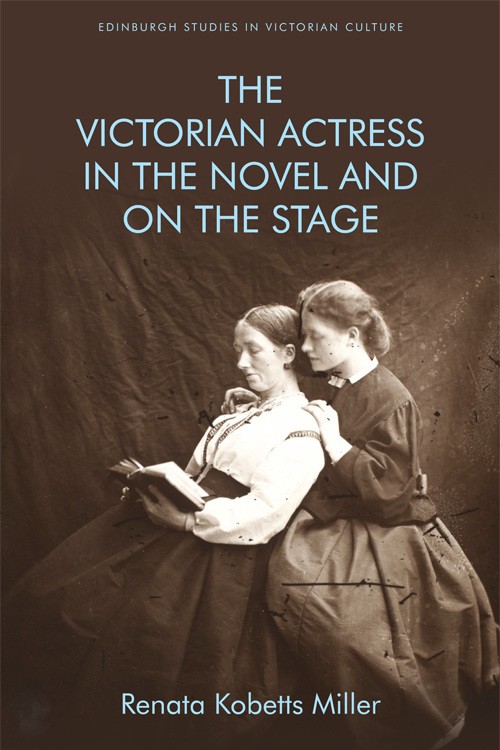
The Victorian Actress in the Novel and on the Stage

by Renata Kobetts Miller

millerThis book analyses how Victorian novels and plays used the actress, a significant figure for the relationship between women and the public sphere, to define their own place within and among genres and in relation to audiences. Providing new understandings of how the novel and theatre developed, Miller explores how their representations shaped the position of the actress in Victorian culture with regard to her authenticity, her ability to foster sympathetic bonds, and her relationships to social class and the domestic sphere. The book traces how this cultural history led actresses to appropriate the pen themselves by becoming suffragette playwrights, thereby writing new social roles for women.

MELODRAMA OUTSIDE OF ITSELF. ARCHETYPES, INTERMEDIALITY, MASS CULTURE

Call for Paper: MELODRAMA OUTSIDE OF ITSELF. ARCHETYPES, INTERMEDIALITY, MASS CULTURE. For «TESTO A FRONTE» (n. 61, November 2019), an Italian peer-reviewed review of translation studies, comparative literature and media studies.
Considered for centuries a marginal dramatic genre straddling the high and low-mimetic modes, with the seminal essay The Melodramatic Imagination: Balzac, Henry James, Melodrama, and the Mode of Excess (1976) by Peter Brooks melodrama has been credited the status of a dominant narrative form of mass culture. It is now clear that melodrama is a declination of modern imagination oriented to elaborate plots marked by a sharp ethical polarization, by an uninhibited taste for excess (lingering in absolute and devouring passions, as well as in extreme situations to the limit of representability) and by a smug aesthetic of amazement: in short a Manichean and boosted device which from the late Eighteenth century vaudeville spreads, during the Nineteenth century, in opera, in the currents of visionary, historical and social romantic painting, in the realist, naturalist, decadent novel, touching the modernist one, and, during the Twentieth century, explodes in the cinematic melo and then in the television seriality.
Literary studies, visual studies, film studies and television studies offer today many glances. sometimes contradictory, but always stimulating, on this complex phenomenon which has always been transversal to codes, genres and media.
Starting from the study of the historical origins of melodrama, the forthcoming issue of Testo a fronte aims at stimulating research contributions able to focus on its meta-historical, theoretical and intermedia dimension, studying in depth the most resilient archetypical structures and the evolving practices of the contemporary melodramatic universe. What about melodrama in after-postmodernism literary fiction, with its massive return to typically modern mimetic forms? What about melodrama in movies after the crisis of the Hollywood system of genres? What about melodrama in the very articulate system of genres and sub-genres of television fiction? What about melodrama in painting beyond abstraction and in general in the age of digital art?
We invite submissions from different scholar perspectives; possible topics can include but are not limited to:
– reconstruction of important moments in the history of melodrama
– identification and description of the archetypal and metahistorical features of melodrama
– implementation of the notion of melodramatic imagination
– definition and mapping of the intermedia dimension of melodrama
– analysis of melodramatic (literary, visual, audiovisual etc.) texts
Proposals, in Italian or in English (max 400 words), should be sent to: testoafronte@iulm.it, by February 10th, 2019. Please attach a brief biography (maximum 150 words) and an optional selected bibliography (up to 5 titles) relevant to the issue theme.
Notification of acceptance will be sent to authors by February 20th, 2019.
Full papers will be due June 20th, 2019 and will be submitted to double blind peer review.
—-
Call for Paper: IL MELODRAMMA FUORI DI SÉ. ARCHETIPI, INTERMEDIALITÀ, CULTURA DI MASSA. Per «TESTO A FRONTE» (n. 61, Novembre 2019), rivista peer-reviewed di traduttologia, letterature comparate e media studies.
Considerato per secoli un genere drammatico marginale a cavallo tra i modi alto e basso-mimetico, a partire dal saggio seminale di Peter Brooks The Melodramatic Imagination: Balzac, Henry James, Melodrama, and the Mode of Excess (1976), al melodramma è stato riconosciuto lo statuto di forma narrativa dominante della cultura di massa. È ormai acclarato che si tratta  di una declinazione dell’immaginazione moderna orientata a elaborare trame contraddistinte da una netta polarizzazione etica, da un disinibito gusto per l’eccesso (che indugia in passioni assolute e divoranti, così come in situazioni estreme al limite della rappresentabilità) e da una compiaciuta estetica dello stupore, insomma di un dispositivo manicheo e survoltato che dal vaudeville di fine Settecento si dissemina nell’Ottocento nel teatro musicale, nelle correnti pittoriche del romanticismo visionario, storico e sociale, nel romanzo realista, naturalista, decadente, lambendo quello modernista, e nel Novecento esplode nel melò cinematografico e poi nella serialità televisiva.
Gli studi letterari, i visual studies, i film studies e i television studies propongono oggi sguardi molteplici, talvolta contraddittori, ma sempre stimolanti, su questo fenomeno complesso e da sempre trasversale a codici, generi e media.
A partire dallo studio delle origini storiche del melodramma, il numero 61 di Testo a fronte vuole sollecitare contributi di ricerca capaci di metterne a fuoco la dimensione metastorica, teorica e intermediale, concentrandosi sulle strutture archetipe maggiormente resilienti e sulle prassi in evoluzione dell’universo melodrammatico contemporaneo. Che ne è del melodramma nella narrativa letteraria successiva al postmoderno, dove si assiste a un massiccio ritorno a forme mimetiche tipiche del moderno? Che ne è del melodramma al cinema dopo la messa in liquidazione del sistema hollywoodiano dei generi? Che ne è del melodramma nell’articolatissimo sistema dei generi e sottogeneri della fiction televisiva? Che ne è del melodramma nella pittura oltre l’astrattismo e in generale nell’epoca dell’arte digitale?
Sollecitiamo contributi da diverse discipline, organizzati intorno ai seguenti temi che esemplificano ma non esauriscono le possibili opzioni di ricerca:
– ricostruzione di momenti significativi della storia del melodramma
– individuazione e descrizione dei tratti archetipi e metastorici del melodramma
– implementazione della nozione di immaginazione melodrammatica
– definizione e mappatura della dimensione intermediale del melodramma
– analisi di testi (letterari, visivi, audiovisivi ecc.) melodrammatici
Si accettano proposte in italiano e in inglese.
Le proposte (lunghezza max 400 parole), dovranno pervenire entro il 10 febbraio 2019 al seguente indirizzo e-mail : testoafronte@iulm.it, complete di una breve biografia dell’autore (150 parole) ed eventualmente di una bibliografia di riferimento (massimo 5 titoli).
L’accettazione della proposta verrà comunicata entro il 20 febbraio 2019.
Gli articoli definitivi (lunghezza massima 40.000 battute spazi inclusi) dovranno pervenire alla Redazione entro il 20 giugno 2019 e saranno sottoposti a peer review.