I Want My New Music Television: The Emerging Field of Popular Music and Television
CFP, Society for Cinema and Media Studies: Toronto, March 14-18, 2018
From Empire (2015–), to Vinyl (2016), to Lip Sync Battle (2015), to Grease Live! (2016), television in the United States seems preoccupied with remaking, reperforming and reimagining the histories and myths of popular music. This panel seeks to survey the recent landscape of popular music-centric programming on television, across network, cable, and online platforms, and outside of considerations of the music video or soundtrack. This varied field encompasses multiple genres, such as comedy, melodrama, period drama, documentary, musical, and reality singing competitions. Like intersections of film and popular music, these post-network era programs often bank on the star power of established celebrities in the music industry, big-budgets, and/or Oscar-winning directors.
This panel is particularly interested in interrogating how popular music on television is especially productive for examining representations of race, class, gender, sexuality, nationality, and industry. A secondary goal is to examine how televisual narratives negotiate and play with music genres and histories, in ways that operate as nostalgically pleasing, but conversely, may also be off-putting to their built-in audience of music fans. Collectively, this panel aims to answer how and in what ways does such programming reinforce and/or criticize the conventions and codes of the popular music genres, and the texts and tropes that they depict.
Suggested programs and specials (but not limited to):
Network Musicals (Hairspray Live!, Grease Live!, The Wiz Live!, The Rocky Horror Picture Show: Let’s Do the Time Warp Again)
Remakes (Dirty Dancing)
Period drama (The Get Down, Vinyl, Sun Records)
Melodrama (Empire, Star, Nashville)
Comedies (Glee, Roadies, Sex & Drugs & Rock & Roll)
Reality Television (The Voice, American Idol, Lip Sync Battle)
Documentary (Defiant Ones, Hip-Hop Evolution)
Proposals must include an abstract (2500 characters/250-300 words); 3-5 bibliographic sources; and a brief biography (500 characters/50-100 words). Please email your proposal to Kristen Galvin by August 11, 2017 (kgalvin@scad.edu). A response will be sent to all submissions by August 15, 2017. Selected submissions and contributors will also be considered for inclusion in an anthology.
 On Friday 25th August there will be a one-off community performance of Pixerécourt’s melodrama La Forteresse du Danube (1805) in translation at the Georgian Theatre Royal, Richmond, North Yorkshire. It will have a professional director, Sarah Wynne Kordas, and orchestra, led by musicologist and violinist Dr Diane Tisdall, with Dr Sarah Burdett as dramaturge. We will be using the original score to the Lille performances of the play. The performance takes place during Richmond’s Georgian festival and is a great opportunity to experience a Napoleonic melodrama in Britain’s oldest working theatre.
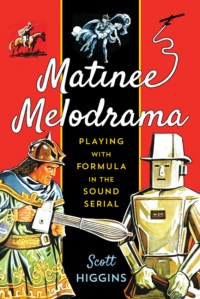 serials whose exciting cliffhangers compelled the young audience to return to the theater every seven days.
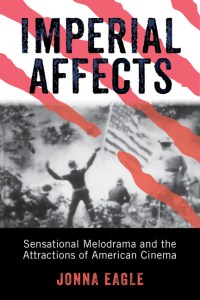 late-century action cinema, imperialist violence and mobility have been produced as sites of both visceral pleasure and moral virtue. Suffering and omnipotence operate as twinned affects in this context, inviting identification with an American national subject constituted as both victimized and invincible—a powerful and persistent conjunction traced here across a century of cinema.
 Melodrama Research Consortium